


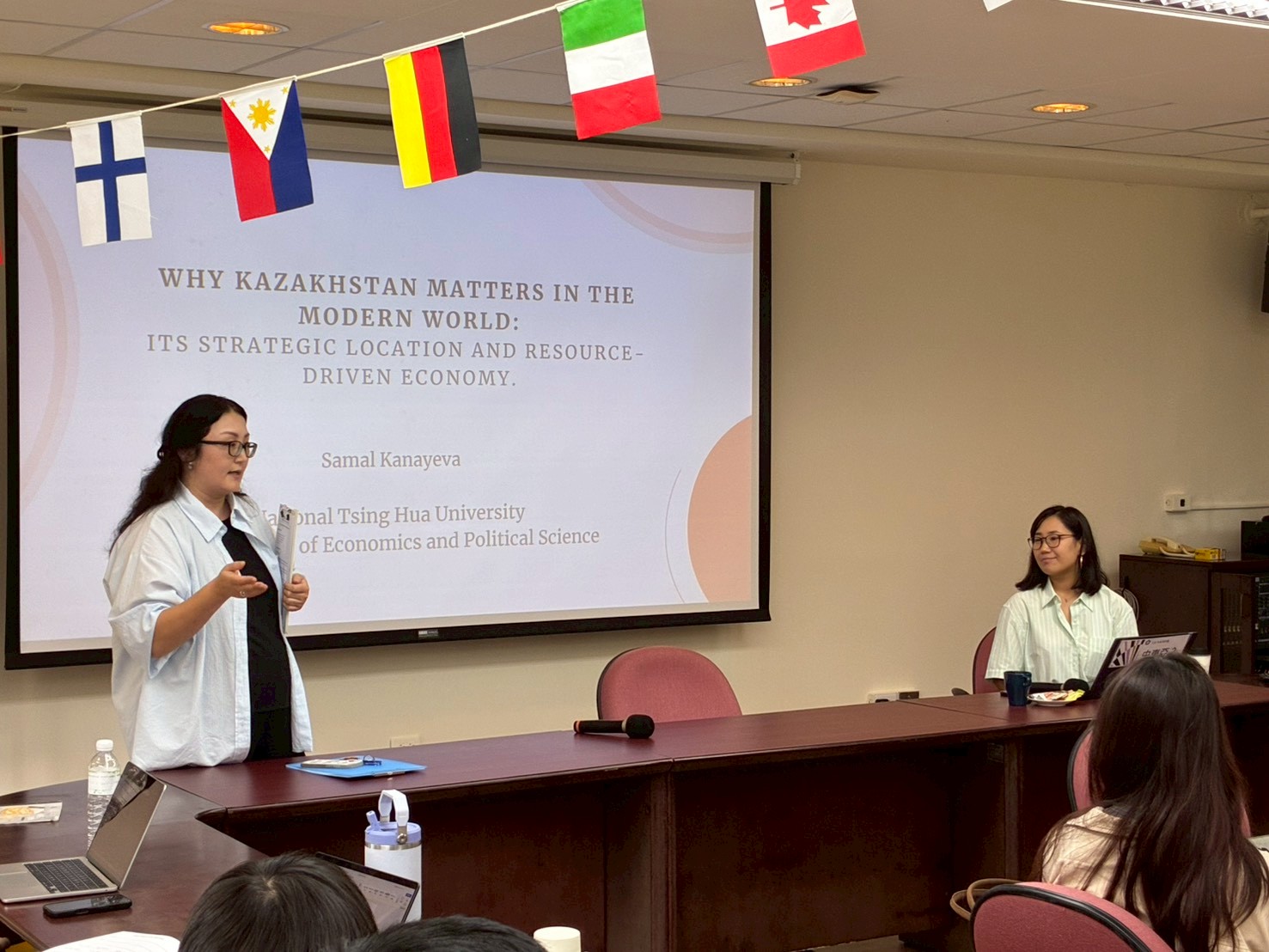
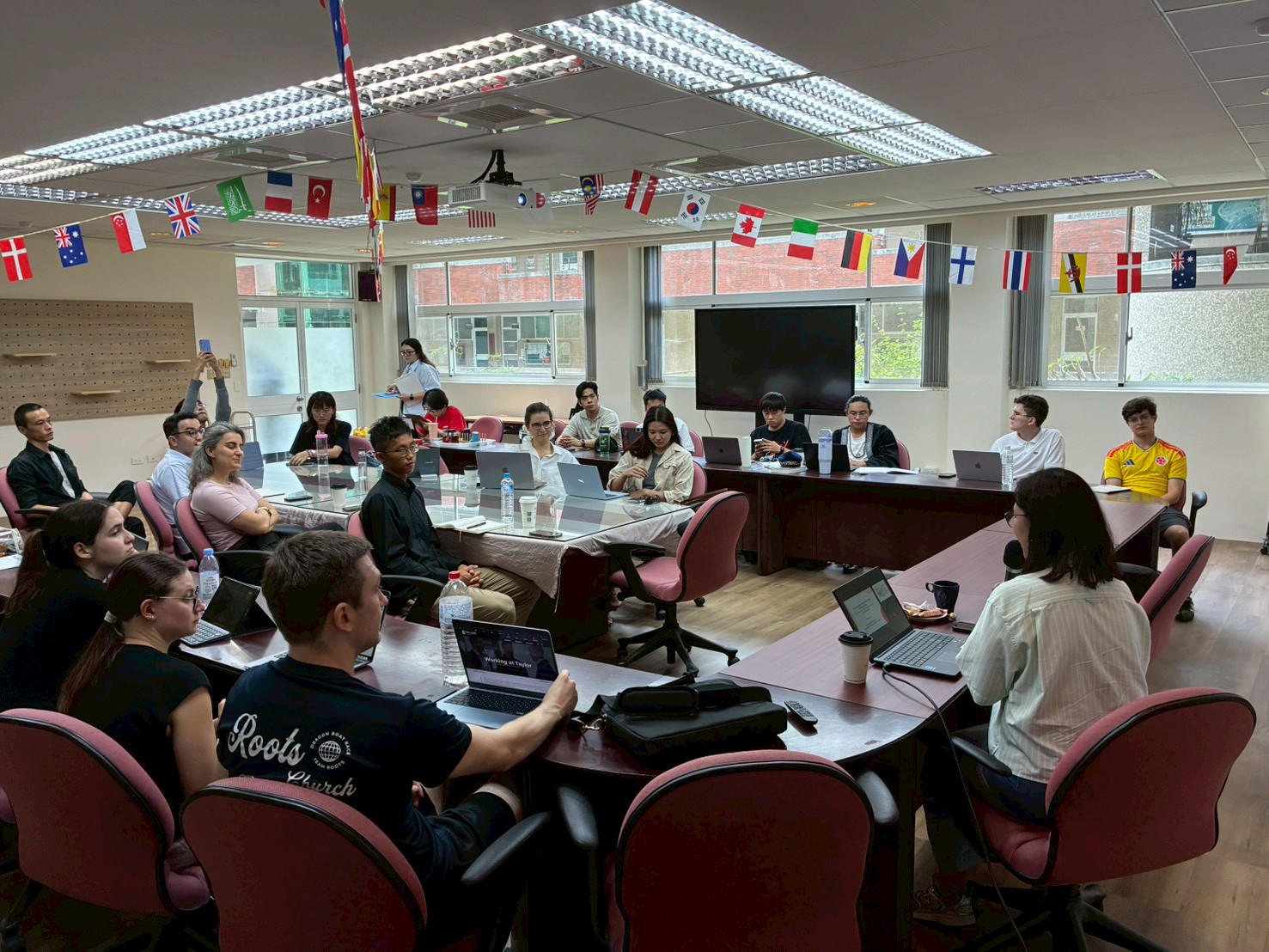
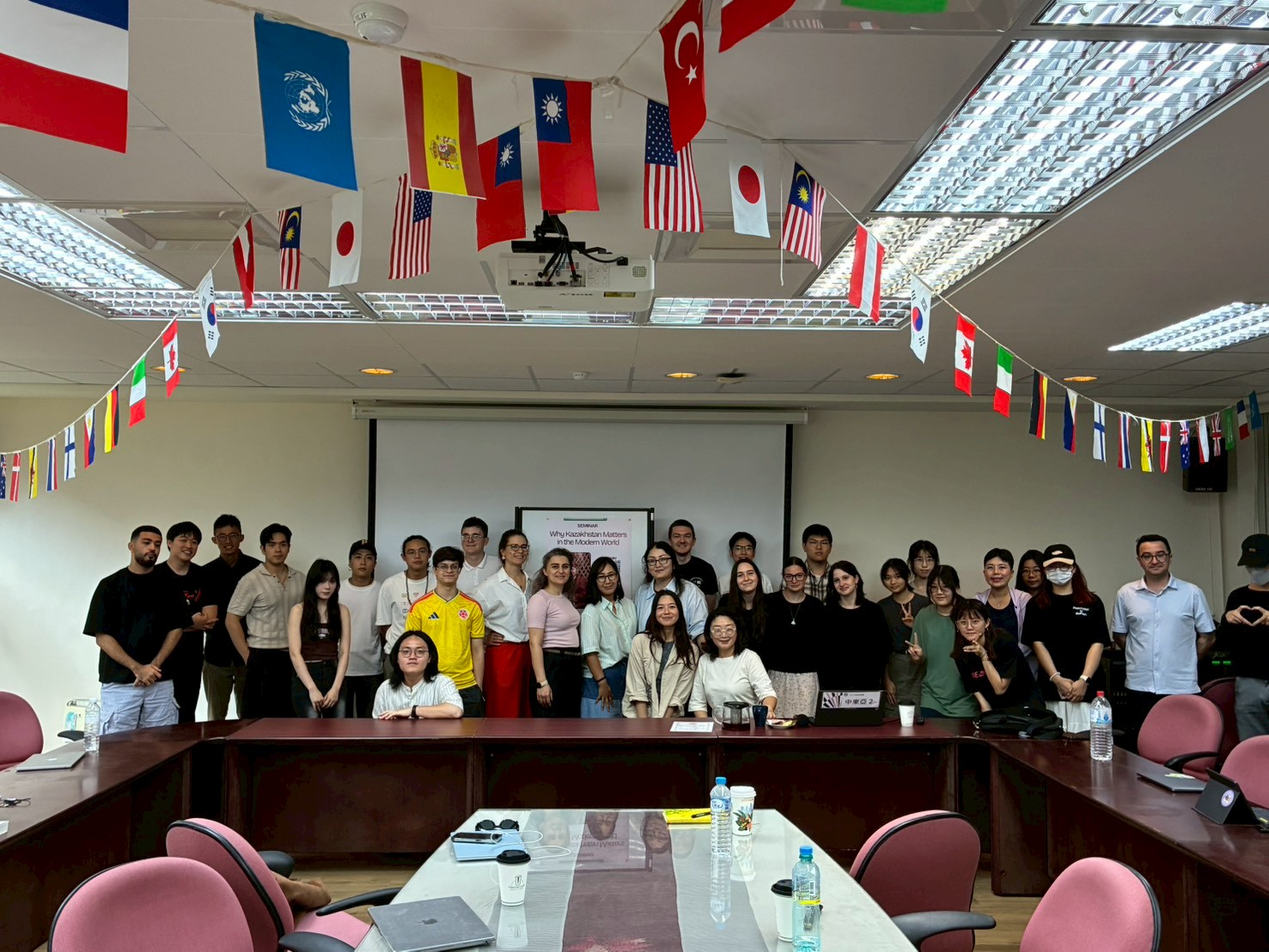
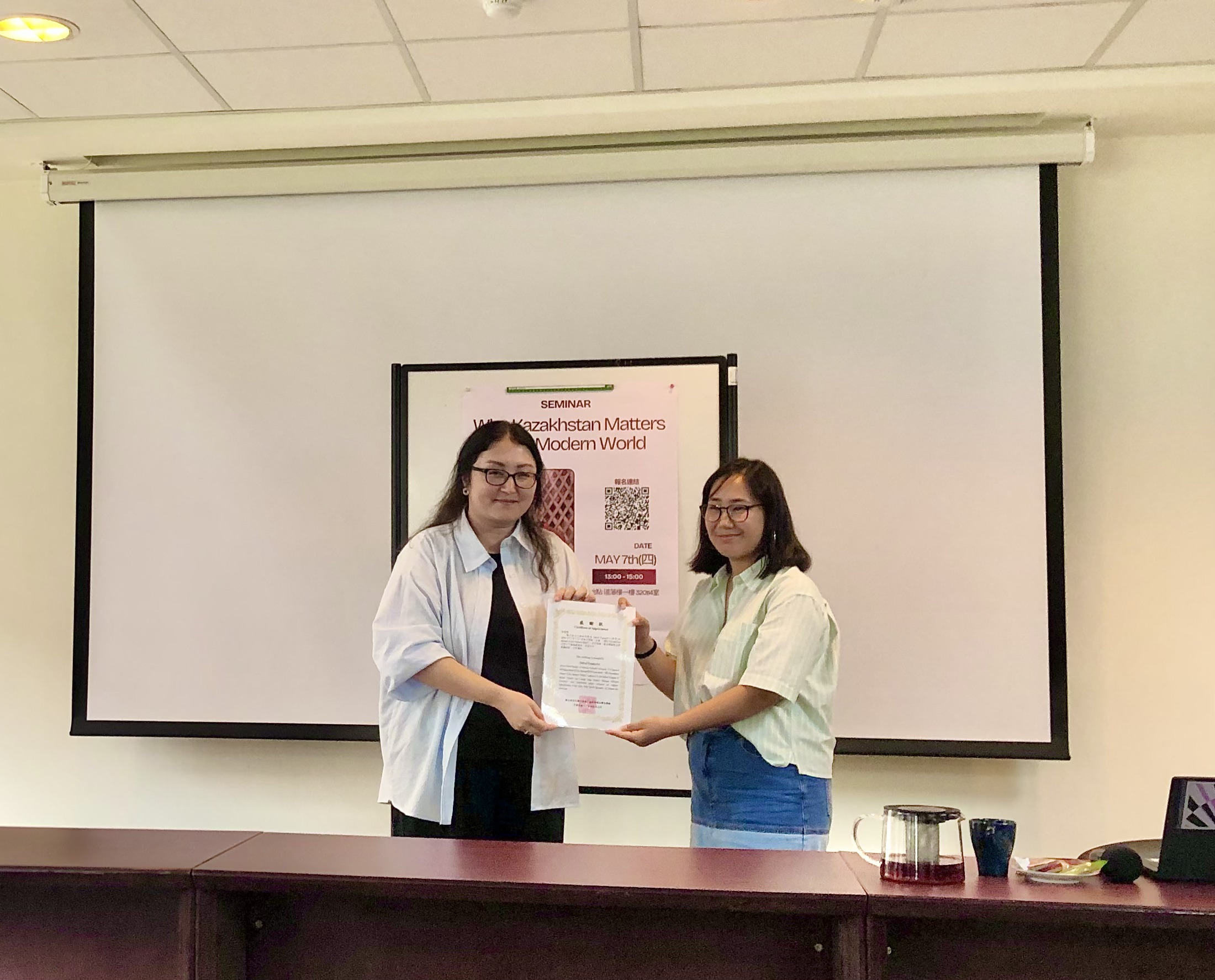
The Master’s Program in Middle Eastern and Central Asian Studies at National Chengchi University hosted a special lecture titled “Why Kazakhstan Matters in the Modern World: Its Strategic Location and Resource-Driven Economy” on May 7, 2026, at Dao Fan Building. The keynote speaker was Mrs. Samal Kanayeva, who delivered a comprehensive overview of Kazakhstan’s role as a middle power on the international stage, covering its strategic location at the heart of Eurasia, its resource-driven economy, and its multifaceted foreign policy.
The lecture began with an introduction to Kazakhstan’s background. The speaker emphasized that Kazakhstan, with a population of over 20 million and its capital in Astana, has become a pivotal state in Central Asia. With both Kazakh and Russian as official languages, Kazakhstan contributes approximately 60% of Central Asia’s GDP.
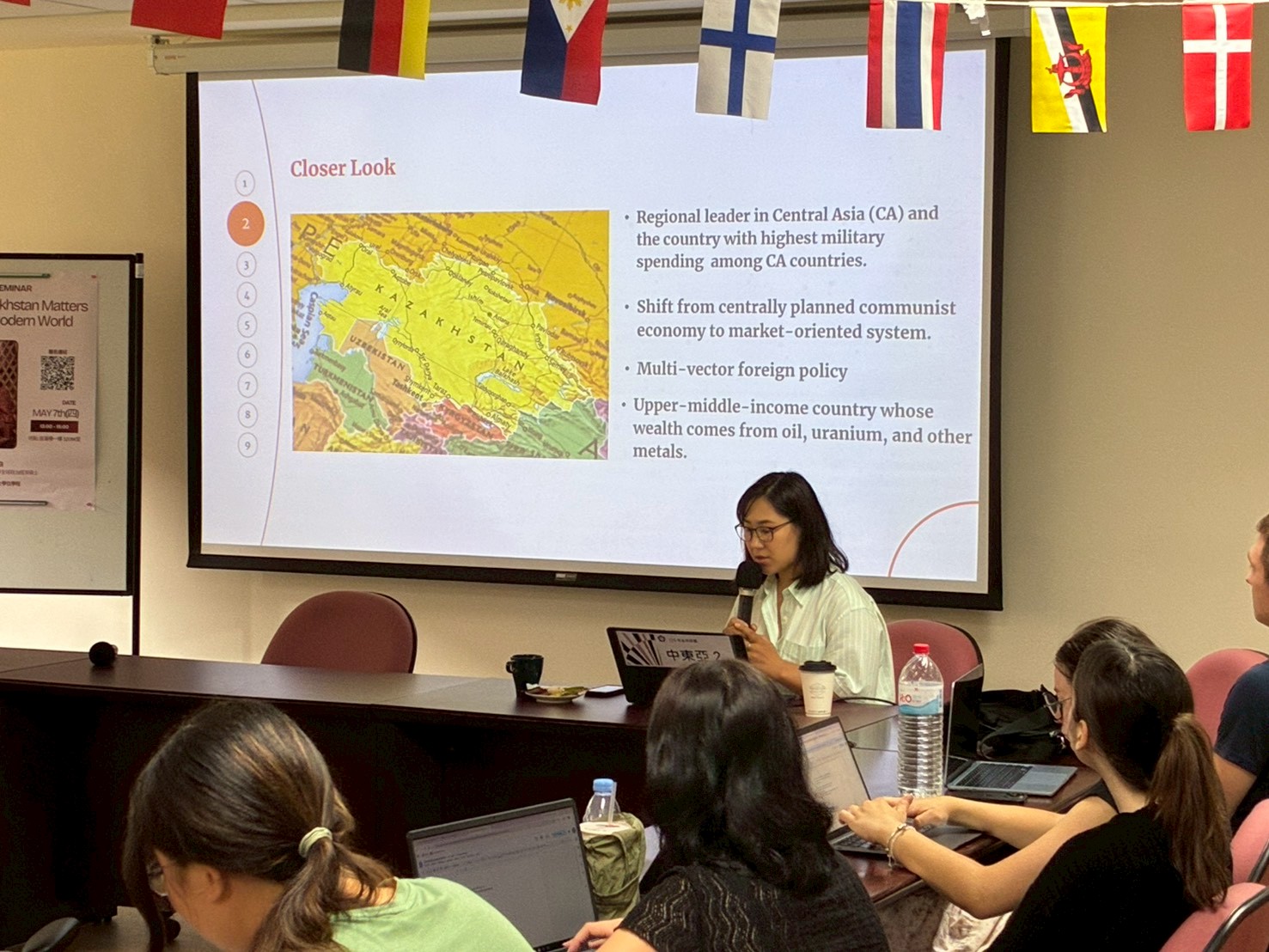
As a regional leader, Kazakhstan successfully transitioned from a planned economy to a market-oriented system after the Cold War, maintaining cooperation through a policy of “multi-vector diplomacy.” Its economic lifeline lies in oil, natural gas, and the world’s largest uranium reserves, attracting significant foreign investment and driving rapid growth. However, heavy dependence on energy also poses risks, including overreliance on Russian export routes and insufficient transparency in industry governance.
Diplomatically, Kazakhstan elevated its relations with China to a “permanent comprehensive strategic partnership” in 2019. China is now its largest trading partner, strengthening infrastructure and energy cooperation through the Belt and Road Initiative. Yet, concerns remain domestically about Chinese expansion and debt dependency. Relations with Russia are deeply intertwined due to history and geography, with Russia supplying 94% of Kazakhstan’s defense equipment and controlling 80% of its oil export pipelines. The war in Ukraine has further complicated Kazakhstan’s political balancing act. Meanwhile, although the U.S. reduced its focus on Central Asia after withdrawing from Afghanistan, the Russia-Ukraine war has renewed American interest in Kazakhstan, particularly through energy investment and multilateral cooperation.
On trade and transportation, Kazakhstan has actively promoted the “Middle Corridor” as an alternative to Russia’s northern route. Since 2023, freight volume has grown significantly, with support expressed by the EU, the U.S., and China, underscoring the corridor’s strategic potential.
Looking ahead, the speaker identified three major challenges for Kazakhstan: balancing energy development with diplomatic equilibrium and carbon reduction goals; navigating the technological divide between the U.S. and China with flexibility; and reducing economic dependence on China and transport reliance on Russia. These challenges will determine Kazakhstan’s ability to sustain its influence on the global stage.
The seminar concluded with a lively Q&A session, with participants raising questions on Kazakhstan’s balancing strategies among major powers, the future of the Middle Corridor, and broader topics such as the country’s natural landscapes, cuisine, and culture. Mrs. Kanayeva enthusiastically shared insights into various aspects of her homeland, bringing the event to a memorable close that highlighted one of Central Asia’s most influential yet often overlooked nations.
